
Economic think tank GTRI has urged the Indian government to withdraw the proposed UPI charges, set to begin on October 15, arguing that the digital payment system should remain free for merchants and consumers. GTRI warns that these charges could lead to higher prices, reduced earnings for small businesses, and weakened household demand, while also benefiting international card networks by eroding UPI's price advantage. The think tank also called for an independent audit of UPI's running costs.

Trade and business associations across India are organising a 'No UPI Day' on October 2 to protest the upcoming 0.4 per cent merchant discount rate (MDR) on Unified Payments Interface (UPI) transactions exceeding 2,000, effective from October 15.

75% of India's 60 million digital-payment merchants have never recorded a transaction above 2,000.

Finance Minister Nirmala Sitharaman has strongly refuted Opposition allegations that the decision to levy a 0.4 per cent Merchant Discount Rate (MDR) on specific UPI transactions above Rs 2,000 was influenced by external pressure. She clarified that the decision was a professional one made by the payment ecosystem, not a government imposition or a tax on consumers, with collected funds distributed among banks and UPI entities to ensure a sustainable digital payments framework.

Apple Pay has officially launched in India, integrating with CCAvenue and partnering with Axis Bank to bring secure and convenient mobile payment solutions to millions of iPhone, iPad, and Apple Watch users across a vast network of merchants.

A two-day weekend would help employees recover physically and mentally. They would return better prepared for branch work that demands patience, judgment, and accuracy, asserts Tamal Bandyopadhyay.

The opposition has intensified its criticism of the government's decision to impose a 0.4 per cent Merchant Discount Rate (MDR) on UPI transactions above Rs 2,000, effective October 15. Leaders like Rahul Gandhi and Jairam Ramesh allege the move is a result of US pressure, particularly from American card companies, and demand an immediate rollback, warning of increased costs for consumers.

The NCP (SP) has demanded a complete rollback of the 0.4 per cent Merchant Discount Rate (MDR) on UPI transactions above Rs 2,000, effective October 15. The party termed the move a "direct assault" on small traders and shopkeepers, accusing the Modi government of "double standards" by burdening small merchants while large industrialists benefit from loan write-offs.
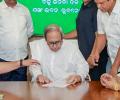
BJD chief Naveen Patnaik has voiced concerns over the Centre's decision to introduce Merchant Discount Rate (MDR) charges on UPI transactions above Rs 2,000 from October 15, urging protection for small traders and common people. This move has sparked a political debate, with the BJP defending the charges as beneficial for digital infrastructure and largely not impacting consumers, while the Congress and traders' associations criticise it as an additional burden.

The Congress party has strongly refuted government claims that its MPs on the Parliament Standing Committee on Finance supported a fee on high-value UPI payments. Congress leaders, including Gaurav Gogoi and Manish Tewari, stated that the "UPI tax" proposal was not specifically discussed by the committee, accusing the Modi government of diverting attention from public backlash and appeasing US companies. The government, however, cited the committee's report which pressed for a tiered Merchant Discount Rate (MDR) framework.
Left parties have strongly condemned the government's decision to impose charges on UPI payments exceeding Rs 2,000, with CPI General Secretary D Raja alleging the move was made under "US pressure" to favour foreign payment companies. Both CPI and All India Forward Bloc demand the withdrawal of this "anti-people decision," arguing it burdens consumers and merchants while undermining UPI's role as a public digital infrastructure. They highlight concerns that the charges weaken India's digital sovereignty and serve commercial interests of foreign corporations like Visa and Mastercard.
Samajwadi Party president Akhilesh Yadav has criticised the BJP government's proposed Merchant Discount Rate (MDR) on high-value UPI transactions, calling it a "chungi" (tax) on digital payments. He alleged the move was an attempt to extract money from people's transactions, contradicting the government's goal of a trillion-dollar economy. The new UPI framework will impose a 0.4% MDR on person-to-merchant transactions above Rs 2,000 from October 15, with certain sectors having a flat Rs 5 MDR.
The CPI(M) has strongly opposed the Union government's proposal to levy charges on UPI transactions, calling it a "breach of public trust" and demanding the immediate withdrawal of the legislation. The party highlighted that the government had previously promoted UPI as a free public utility, encouraging widespread adoption, and now seeks to monetise this infrastructure. They also linked this move to a broader trend of increasing banking charges.

Making UPI payments fee-based for some transactions could enhance mental reservations against digital payments -- which have largely been overcome -- once more. Do we want to regress?, asks R Jagannthan.

Canadian billionaire Prem Watsa's Fairfax Financial Holdings will utilise the expertise of Deepak Parekh and Paresh Sukthankar, former HDFC leaders, as it moves to acquire a 60.72 per cent stake in IDBI Bank for 52,878 crore, with N S Kannan proposed as chairman.

The GST Council is set to discuss the application of GST on merchant fees for UPI transactions exceeding Rs 2,000. This comes as a new Merchant Discount Rate (MDR) of 0.4% (capped at Rs 300) is effective from October 15 for such transactions, which, as a service, would typically attract an 18% GST levy. The Council's decision is anticipated to consider consumer interests, with merchants potentially able to claim Input Tax Credit.

The Supreme Court has refused to grant an interim stay on the imposition of Merchant Discount Rate (MDR) on UPI person-to-merchant transactions exceeding Rs 2,000, which is set to take effect from October 15. The court has agreed to examine the challenge to this new fee and has issued notices to the Centre, RBI, and NPCI, seeking their responses within four weeks. A Public Interest Litigation (PIL) argues that the levy lacks statutory safeguards, transparency, and public consultation, and could adversely affect merchants and consumers.

Airpay Payment Services has partnered with Maharashtra State Co-operative Bank (MSCB) to enable UPI-based digital payments across the lender's network in Maharashtra, aiming to accelerate financial inclusion in rural areas.

The Finance Ministry has clarified that the decision to impose a 0.4% Merchant Discount Rate (MDR) on UPI transactions above Rs 2,000 was made independently, refuting claims of foreign influence. The ministry stated the policy aims to build a self-sustaining digital payments ecosystem, with MDR funding infrastructure and supporting small merchants.

Fintech company BharatPe has expressed strong support for the government's new Merchant Discount Rate (MDR) framework for UPI merchant transactions, which introduces a 0.4% fee on transfers exceeding Rs 2,000. The company explicitly distanced itself from critical remarks made by its former co-founder Ashneer Grover, clarifying that his views do not represent BharatPe's stance. BharatPe CEO Nalin Negi highlighted that the framework aims to strengthen digital payment economics, protect consumers and small merchants, and expand adoption in underserved markets, with most transactions remaining unaffected.

Petrol pump dealers seek exemption from the proposed 5 UPI charge on fuel purchases above 2,000, citing pressure on their margins.
A high-level committee, including representatives from banks and payment associations, is set to decide on Merchant Discount Rate (MDR) for UPI transactions exceeding Rs 2,000 to merchants. While person-to-person and person-to-merchant transactions up to Rs 2,000 remain free, the move follows a recent amendment to the Payment and Settlement Systems Act, sparking debate and clarification from the Finance Minister that only certain high-value merchant transactions might incur charges.
The Finance Ministry has refuted allegations that US pressure influenced the decision to levy a 0.4% Merchant Discount Rate (MDR) on select UPI payments. It clarified that NPCI guidelines prioritise RuPay credit cards on UPI to foster a domestic payment ecosystem and that the MDR introduction aims to create a sustainable revenue model for smaller domestic companies, thereby protecting India's sovereignty in digital payments.

The Congress party has criticised the government's new 0.4% charge on UPI transactions above Rs 2,000 for merchants, terming it a "Modi tax". Opposition leaders, including Rahul Gandhi and Mallikarjun Kharge, allege that this move will ultimately burden consumers through price hikes and accuse the government of succumbing to American pressure to dilute India's zero-MDR policy. The government states the charge will support banks and fintechs.

The Reserve Bank of India (RBI) is developing digital public infrastructure and payments intelligence platforms using artificial intelligence and application programming interfaces to improve customer experience and strengthen the payments ecosystem.
Fintech firm BharatPe has publicly supported the government's new Merchant Discount Rate (MDR) framework for UPI merchant transactions, which introduces a 0.4% fee on transfers over Rs 2,000. The company has also distanced itself from its former co-founder Ashneer Grover's strong criticism of these changes, stating his remarks are personal and do not reflect BharatPe's official position. BharatPe believes the new framework will strengthen digital payment economics while protecting consumers and small merchants.
The Congress party has criticised the Modi government over a notification regarding UPI transactions, alleging it paves the way for imposing fees, especially on transactions above Rs 2,000. Rahul Gandhi claimed the government is surrendering to American pressure, while Mallikarjun Kharge highlighted the potential burden on common citizens amidst inflation. The government's notification prohibits charges on UPI transactions up to Rs 2,000 but remains silent on higher amounts, sparking fears of a "Digital Payments Tax."

The National Payments Corporation of India (NPCI) stated that the Merchant Discount Rate (MDR) "is distributed only amongst the UPI ecosystem, to further invest into infrastructure resilience, innovation, cybersecurity (protecting the UPI infrastructure with banks and non-banks) and customer service."

Airtel Business CEO Sharat Sinha stated that evolving architecture and methodologies for safely deploying Artificial Intelligence, coupled with adequate guardrails, are essential to unlock productivity gains. He welcomed the government's upcoming consultation paper on AI regulation, focusing on safety, deepfakes, and a human-first approach. Sinha also highlighted AI's role in driving demand for digital infrastructure and Airtel's growth in cybersecurity and fraud prevention.
The Azadpur Agricultural Produce Marketing Committee (APMC) has introduced an online payment system for gate pass fees, aiming to reduce congestion, enhance transparency, and streamline operations at Asia's largest wholesale fruits and vegetables market. This digital initiative is expected to benefit traders, drivers, and other stakeholders by speeding up vehicle entry and minimising cash transactions.
The Azadpur Agricultural Produce Marketing Committee (APMC) has introduced an online payment system for gate pass fees, aiming to reduce congestion, enhance transparency, and streamline operations at Asia's largest wholesale fruits and vegetables market. This digital initiative is expected to benefit traders, drivers, and other stakeholders by speeding up vehicle entry and minimising cash transactions.

Major fund houses report a sharp rise in online transactions, driven by changing investor habits, distributor behaviour, and fast-growing fintech platforms.

Delhi Police have dismantled an inter-state truck theft and dismantling racket, arresting three individuals including the alleged mastermind. The operation led to the recovery of dismantled parts of a stolen truck from a Punjab godown. The investigation involved technical surveillance, CCTV footage, and digital payment tracking, revealing the accused's involvement in multiple truck thefts across Delhi.
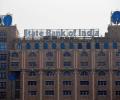
State Bank of India (SBI) anticipates that the newly introduced Merchant Discount Rate (MDR) on person-to-merchant (P2M) UPI transactions above 2,000, effective October 15, will enable it to recover the costs incurred in processing and facilitating these transactions, potentially even generating a small surplus.

The Indian government has introduced a 0.4% transaction fee on UPI payments above Rs 2,000 for merchants, effective October 15, sparking a political row. The Congress party has labelled it a "Modi tax" and accused the government of succumbing to US pressure, while the BJP has defended the move, clarifying that consumers will not be charged and small vendors are protected. The finance ministry reiterated that the charge is on merchants, not customers.

An IIT Madras study reveals that financial cybercrime victims in India are often highly educated professionals, challenging the notion that only careless or financially unaware individuals are targeted. The research highlights that digital literacy doesn't guarantee protection, as fraudsters exploit stress and emotional vulnerabilities.
The Payments Council of India has confirmed that Unified Payments Interface (UPI) services will continue to be free for consumers and small merchants, despite a recent Lok Sabha Bill. This clarification addresses concerns about potential charges, emphasising that while a sustainable financial model for UPI infrastructure is being developed, transaction charges will not be passed on to users or small businesses.

The Finance Ministry has refuted allegations that US pressure influenced the decision to levy a 0.4 per cent Merchant Discount Rate (MDR) on select UPI payments. The ministry clarified that the NPCI guidelines prioritise RuPay credit cards on UPI to promote domestic alternatives and ensure a self-sustaining revenue model for smaller domestic companies, countering claims of favouring foreign payment providers.

The Bharat Interface For Money app was launched on the iOS platform earlier this month. It is also available on the more popular Android platform. There have been over 17 million downloads of the BHIM app so far.

The Indian government has introduced a 0.4% fee on UPI transactions above Rs 2,000 for merchants, effective October 15, sparking strong opposition from political parties and traders. Despite accusations of foreign influence and demands for a rollback, the finance ministry and top functionaries have stated there will be no reversal, citing the need for a self-sustaining digital payments ecosystem.
